
I have been doing this long enough to be selective about where and how I spend my time. Here’s a behind-the-scenes look at how I work at an industry conference, why I went, what I did while I was there, and what it means for the clients I serve.
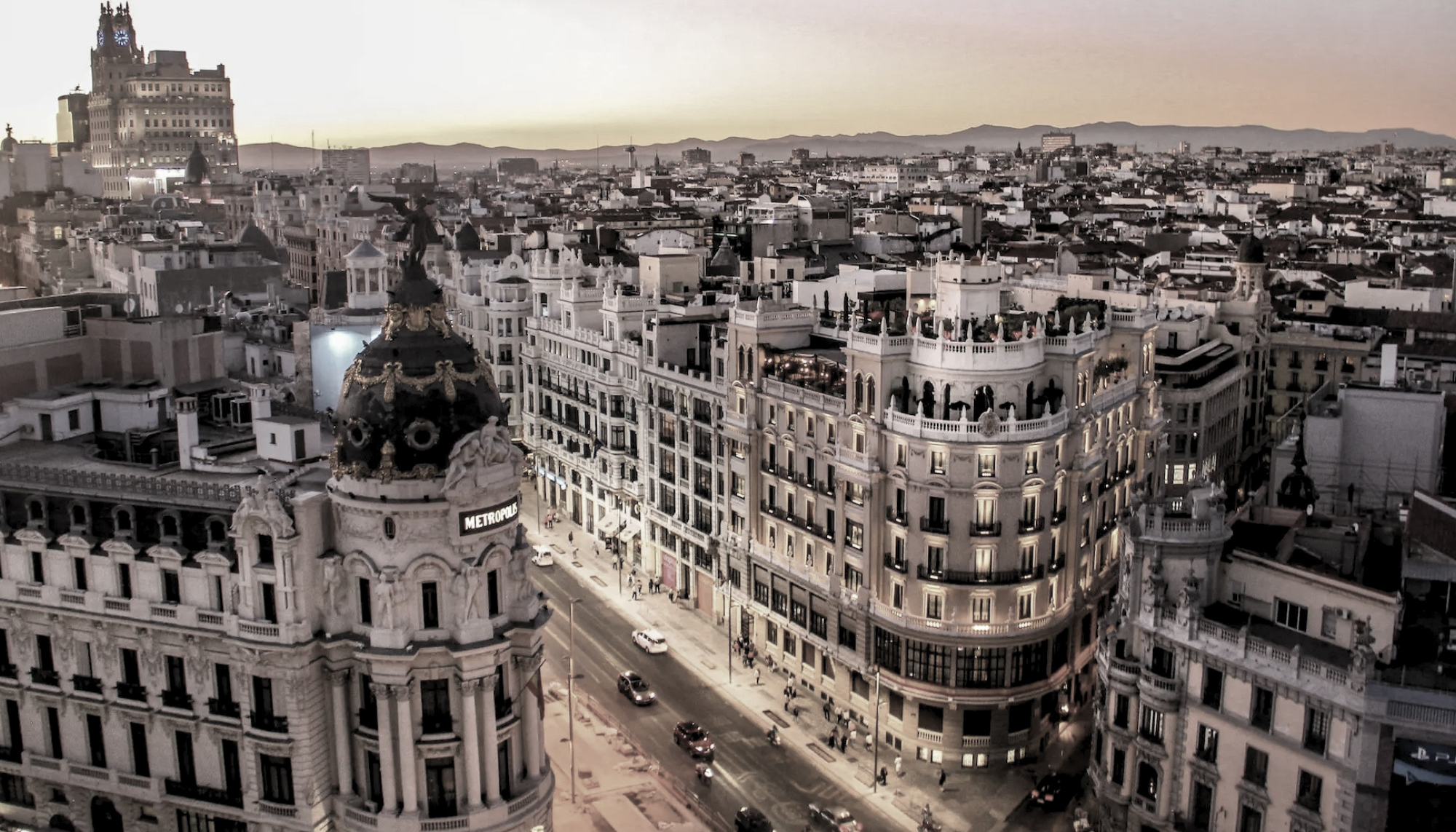
The Emotions Travel Show in Madrid this past week was worth every hour and every dollar.
Fair warning: this particular conference had a theme running through my first morning that I did not anticipate. More on that shortly.

Why Spain. Why Now.
I had not been to Spain in decades. That alone was reason enough to fix.
Spain is one of those destinations that sophisticated travelers assume they know — and frequently underestimate. It rewards a deeper look, and it rewards the advisor who has done that looking personally. I went to Emotions to sell more travel in Spain; I cannot sell it optimally if I haven’t explored it.
There is also a practical conversation worth having openly: Spain is more accessible than other European destinations at this level.
That does not mean budget. It means the value here is honest.
Spain has the goods. The privately guided experience, the boutique hotel with genuine character, the table that requires a relationship — they exist here, and at a price point that makes the investment feel intelligent rather than extravagant.
For clients accustomed to paying premium prices in Paris, Rome, or London and occasionally wondering whether the premium is justified, Spain makes a compelling case. I wanted to know it well enough to argue that case with authority.
Why Emotions Specifically
Not all trade shows are created equal. The format matters as much as the attendee list.
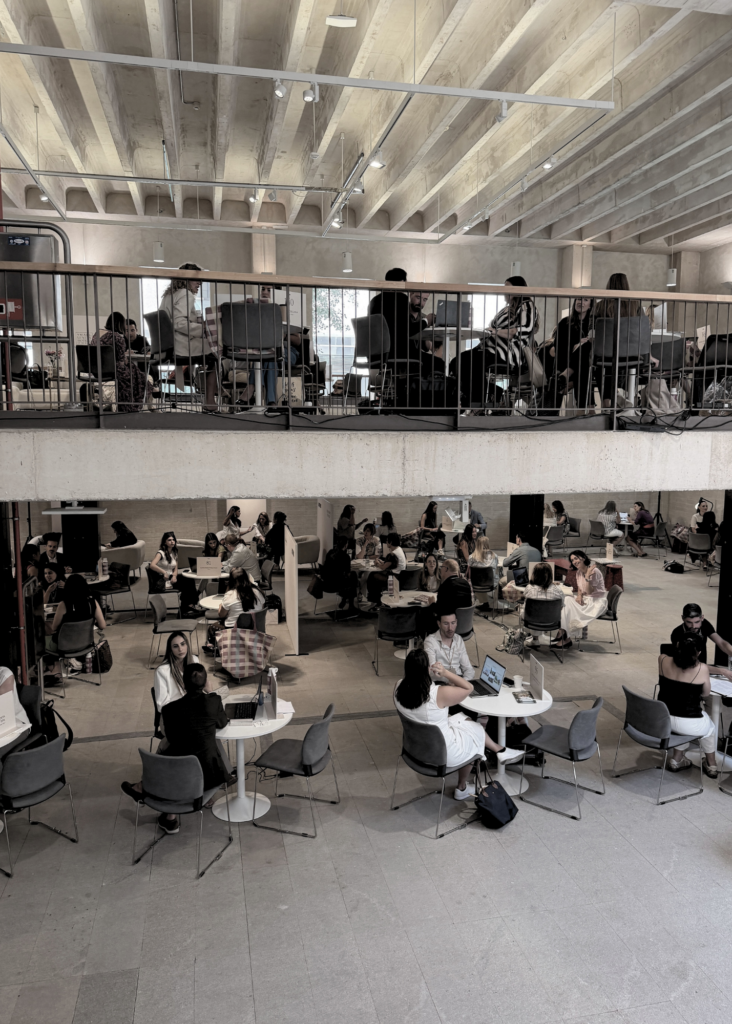
Emotions is a small, concentrated show. That is its strength. There is no noise to cut through, no endless exhibition floor, no dilution of attention. The suppliers who come to Emotions come to have real conversations.
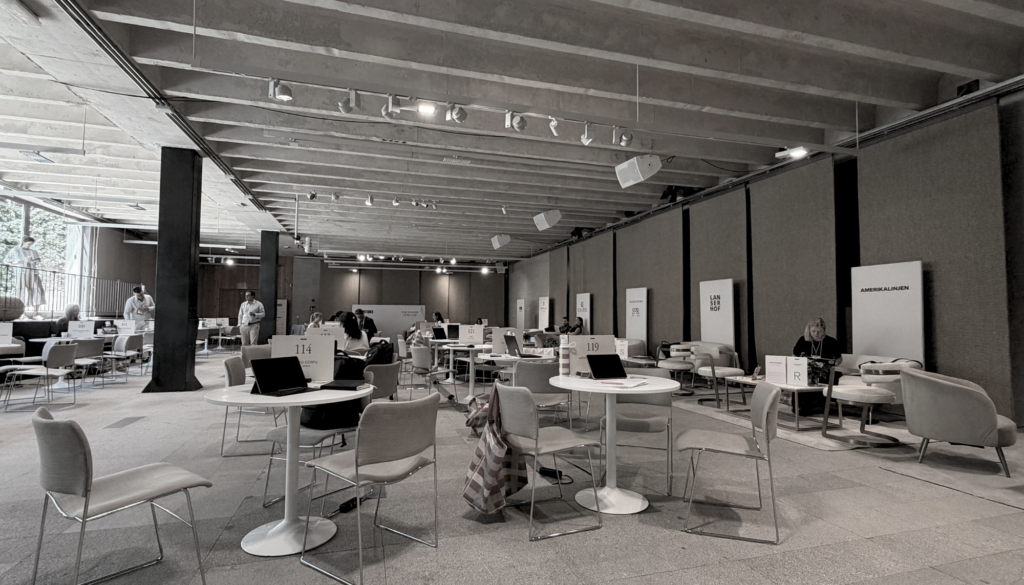
The meeting format is fifteen minutes. That may not sound like much until you have sat through the standard five-minute or eight-minute appointments that pass for meetings at larger shows. Fifteen minutes is enough time to ask a meaningful question and actually hear the answer. It is enough time to determine whether the person across from you is a vendor or a potential partner.
No one paid me to be here. The flight, the days away from my desk, the taxi, most meals, the hotels before and after — that is my investment, made willingly. This is what it looks like to show up for the work.
I took that time seriously.
Over three days, I sat across from 47 suppliers in scheduled appointments, with over ten additional conversations happening on the margins — hallways, lunch, the kind of encounters that remind you why showing up in person still matters. One of those was a supplier I had met at Embark’s Immersion conference in April. We had shared a taxi. There she was again in Madrid. The industry is smaller than it looks, and those overlap moments are never accidental, as she confirmed for me what I was doing with a train booking for a client in France.
In total: 51 conversations in three days.
By region:
Spain (16), Portugal (6), Italy (6), UK (4), Germany/Austria/Switzerland (4), France (3), Croatia (2), Greece (2), Ireland (2), Belgium (2), Monaco (1)
By type:
Hotels and resorts (32), Destination management companies (10), Tourism boards (4), VIP shopping experiences (2)
None of this happens without Embark Beyond. Being included in programs like Emotions is not automatic — it is an honor, and I do not take it lightly. Embark’s reach, relationships, and rigorous standards open doors that would otherwise remain closed, and I am genuinely grateful to be part of an organization that holds the bar this high.
What I Actually Do in Those Fifteen Minutes
I am not there to collect brochures. I am not there to listen to sales pitches. I am there to learn, listen, and interrogate — respectfully, curiously, and with intent.
When I sit down, the best ones ask about my business. Here is what I tell them:
I am based in Washington, D.C., and affiliated with Embark Beyond — a New York-based luxury travel company doing some of the most rigorous and exciting work in this industry right now.
My clients are predominantly couples: dual-income, no children, high discretionary spending, maximum flexibility.
I define wellness broadly — well beyond the green juice, the yoga mat, and the spa, though for some clients that is exactly right. For others, wellness is jumping out of an airplane. It is a private audience with the first violinist of the Berlin Symphony Orchestra, or a behind-the-scenes tour of the Paris Opéra, or a private ballet lesson on a stage that has seen a century of performances. Wellness, as I use the word, is whatever makes you feel more alive, more vital, more fully yourself.
One of my favorite questions to ask a new client: what did you love to do when you were seven, eight, or nine years old — and how do we bring that quality of play back into your life right now? The answers are always revealing and almost always the key to the best trip I can design for them.
My clients are sophisticated, deeply research-literate, and accustomed to doing their own planning. They do not hand that over easily.
They come to me not because they cannot plan a trip, but because I can open doors they cannot open themselves, and because I treat their time as the finite, irreplaceable resource it is.
For hoteliers, I go beyond the numbers — keys (that is, rooms and suites combined, in industry language), pools, treatment rooms, and restaurants. The numbers tell me the shape of a place. The questions that follow tell me its character.
I want to know the average length of stay and whether it aligns with what the property should be attracting. I want to know where guests typically come from — which countries, which cities — because my clients travel internationally precisely to immerse themselves somewhere new, not to find themselves surrounded by the same crowd they left at home. A hotel drawing eighty percent of its guests from one country tells me something important about the experience waiting inside.
For smaller properties — anything under fifty keys — I ask two questions that seem simple and are not: do you have an elevator, and do you have a concierge on staff? Charm does not carry luggage up four flights of stone stairs, and no concierge means no safety net when something needs fixing at eleven o’clock at night.
The questions shift depending on who is sitting across from me, but the intent is the same. I assess whether this person is worth trusting with my clients’ time.
For my partners on the ground, known as DMCs (Destination Management Companies), I ask what information they need from me to do their best work. The answers are instructive. One told me they love knowing what a client does on a Saturday at home — not the résumé version, but the real one: what they reach for when nobody is watching. What they loved before travel was even part of the picture, and what they had done before and never want to repeat. That kind of intake produces a completely different trip than a checklist of destinations and experiences.
From there, I go deeper. For destination management companies, I love to know what the craziest request they have ever received was, and what they did with it. (And boy, did I hear some things!) I want to know their glitch protocol, whether I work with one contact from proposal to execution, their booking window, their minimum spend, and how long their key vendor relationships have been in place.
That last question is where the best stories surface.
One DMC has worked with the same chauffeur company for three generations. The grandfather, mentioned almost in passing, used to ferry Salvador Dali.
That is not a vendor relationship. That is provenance.
And it is exactly the reliable longevity (to use a trendy word) that my clients will carry home long after the luggage is unpacked; my sophisticated, information-hungry, and deeply curious clients value discernment, discretion, and distinction.

The Theme of My First Morning
I mentioned a theme. Here it is.
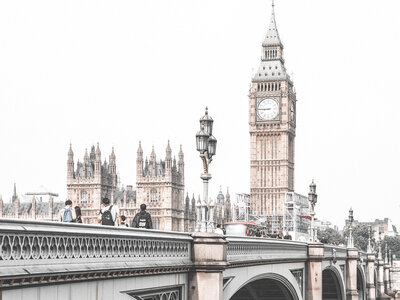
A London hotel I met with — serious property, impeccable credentials — mentioned almost as an aside that they have a Director of Spiritual Healing on staff. Lovely. And very unusual. What followed next was even more unusual: they also retain a dominatrix who offers special educational sessions in self-play and intimacy. The bestselling items in the minibar are Italian design award-winning sex toys, perhaps not surprisingly.
I moved this to the top of my “properties requiring a very specific client brief” list.
Another DMC presented their Barcelona portfolio. Clients had requested an avant-garde experience and were emphatic that they had no interest in Gaudí, no interest in surrealism, nothing predictable. The DMC did what good operators do: they asked enough questions to understand what avant-garde actually meant to this particular couple. What they designed was a private experience combining wine tasting and bondage techniques.
By ten-thirty on the first morning, I had encountered this territory twice.
I share this not to shock but because it illustrates something true about this work: the range of what people want from travel is genuinely vast, and the best suppliers are the ones who can hold that range without flinching and execute it with the same professionalism they bring to a cooking class in Tuscany.
Curiosity and discretion in equal measure. That is what I am looking for across the table.
Details That Stay With You
Not everything at Emotions was quite so colorful. But the quieter details were just as telling.
And none of what follows is searchable. Not because it is secret, but because the kind of intelligence that comes from sitting across a table from someone, asking the right question at the right moment, and knowing enough to recognize what you are hearing does not live on a website. It lives in the relationship. And relationships are built in rooms like the ones I sat in this week.
Here is a small sample of memorable things I learned:
- A DMC has spent nearly two years engineering a private solar eclipse experience in a remote area — an English-speaking astronomer on-site, a meteor shower that same night, and fifteen guests. It does not exist on any booking platform.
- One wellness brand reported a 70% repeat-guest rate. I will be visiting personally this summer before I send a single client.
- Wild swimming in a Bavarian alpine lake — cold, clear, no crowds. The kind of thing that does not leave you.
- A Swiss hotel built entirely without nails, by hand, using regional wood and techniques that required acquiring lost technology to execute. It took years.
- A 16th-century Andalusian palace in Granada where three rooms look directly onto the Alhambra. Not toward it. Onto it.
- A monastery in Mallorca, run by three brothers from the island, where guests can work the farm in the morning and sit down to a six-course dinner in the evening. The olive oil on the table comes from the trees outside the window.
- A cliff-top hotel on the Amalfi Coast with 35 rooms, a village of 600, the largest spa on the coast, and a Michelin star earned seven months after opening. Very unique and very modern.
- A former perfume factory in Milan’s design district, now a five-star hotel where every suite is named for a fragrance, the cocktails are composed around scent, and the on-site laboratory offers a perfume tasting structured like a wine flight. For the right client, this is not a hotel with an interesting amenity. It is the entire point of the trip.
- A hotel in Antwerp built within a 15th-century monastery, with tunnels beneath the property that have remained unchanged since the 1400s. The restaurant opens ten days a month. Reservations require planning. A meal there can last three hours. No phones.
- A Paris hotel suite with Marlene Dietrich’s piano in it. The key is knowing how to ask.
- A palace built in 1897. Game of Thrones filmed here. So did Star Wars. Americans dismiss it because of the brand flag on the door. They are wrong.
- Inside one of Paris’s most storied department stores, there is a private apartment with no signage and no walk-in access. I can get you in. Welcome drinks, curated selections, tax refund handled, and no minimum purchase. Through my Embark partnership, there is also a dedicated suite experience designed specifically for men. You will not find either on any website.
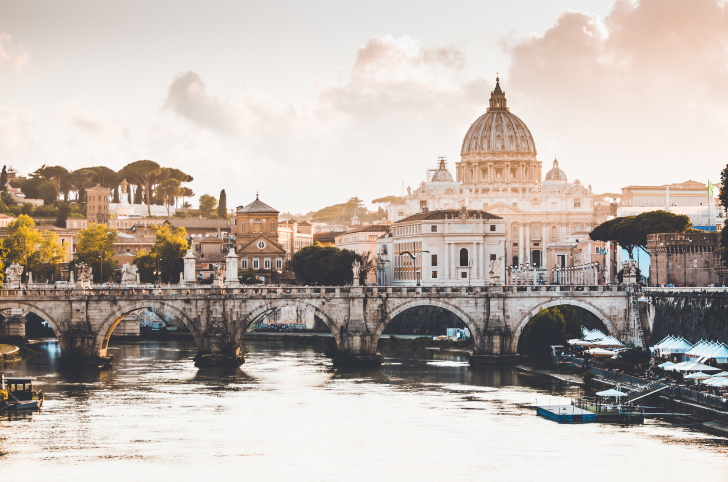
- My favorite hotel in Florence just announced a five-star opening in Piedmont this month. Truffle country. Barolo country. The same DNA, a region most visitors have not yet found.
- In Rovinj, Croatia — a city so beautiful it has been called the pearl of the Adriatic — the Grand Park Hotel sits 10 minutes from an old town that looks as if it were painted rather than built. The surrounding region of Istria is truffle country, family-winery country, home to a Roman amphitheater where Sting and Lenny Kravitz have performed. And somewhere on the nearby Brioni Islands, Tito’s parrot — named Koki, still alive, still swears — holds court as the most improbable living piece of Cold War history in the Mediterranean.
Here is everyone I sat down with, day by day. If a name stops you, that is the conversation worth starting. Tell me which one and I will tell you what I learned.
What This Means for You
A word on how I actually work with clients, because I think it matters here: I am not someone who takes over your trip. I am someone who partners on it. You bring the vision, the curiosity, the non-negotiables. I bring the access, the intelligence, and the judgment about what is worth your time and what is not. The trip that results is yours. I just make sure it’s worthy of you.
Madrid added considerably to what I can bring. I left with relationships, intelligence, and a sharpened sense of what is possible — particularly in Spain, Italy, Croatia, and France right now.
You would not manage your own investment portfolio without a financial advisor simply because the internet exists and the information is technically available. The value is not the information. The value is knowing which information matters, how to act on it, and what it costs you when you get it wrong. Travel works the same way. I spend an extraordinary amount of time — and my own money — learning, connecting, and vetting so that you do not have to.
I said at the outset that I have been doing this long enough to be selective about where I spend my time. Madrid was a good use of it. The question now is whether any of these destinations is a good use of your time.
If they are, I know who to call, what to ask for, and what to avoid.
Reach out. Let’s talk.