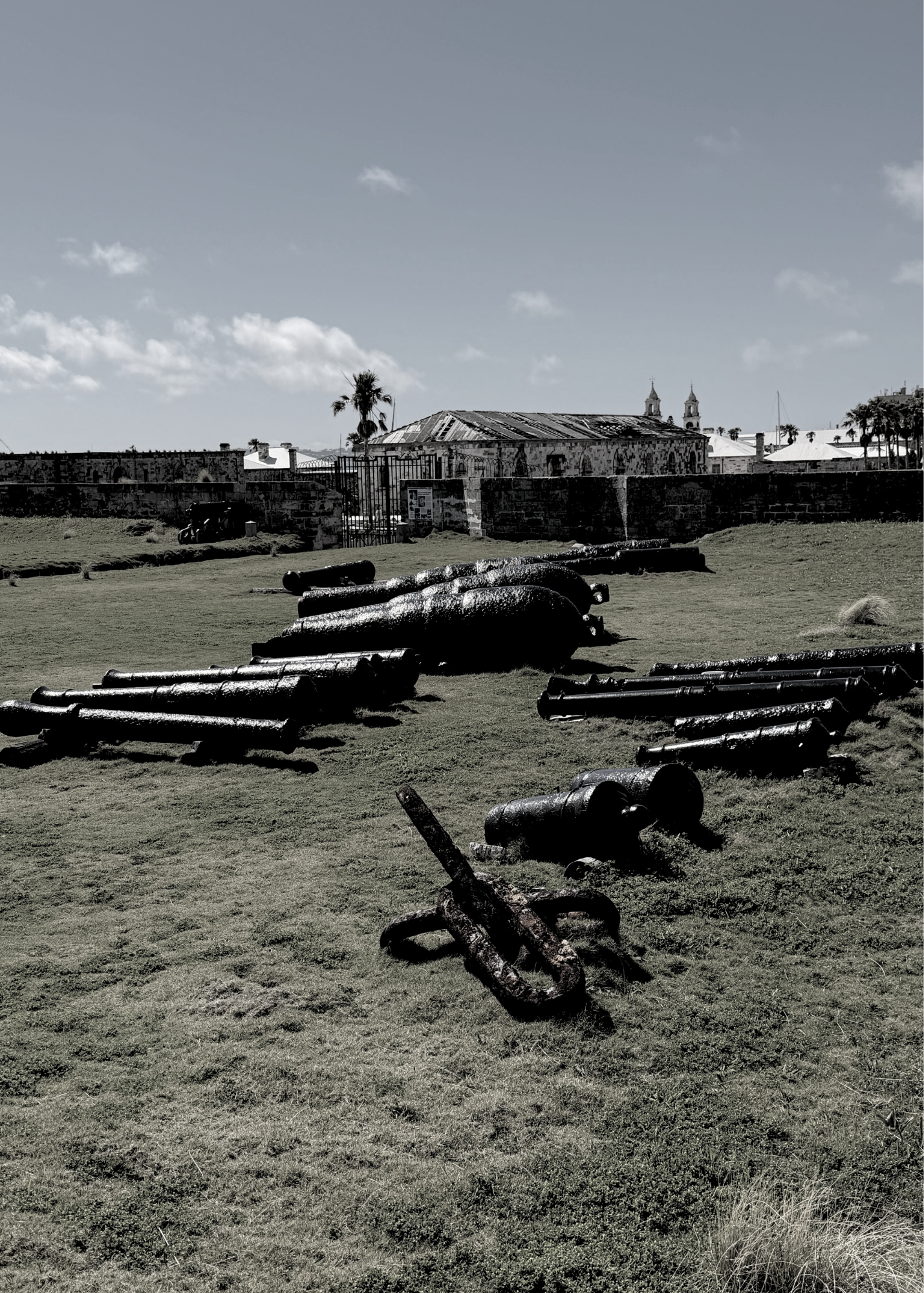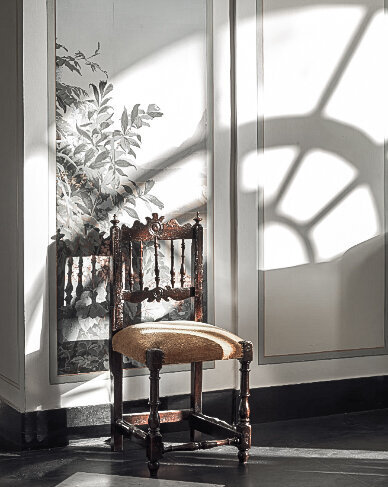

Bermuda is so visually composed, pale stones, clean lines, a kind of restrained beauty, that it’s easy to move through it without resistance. Everything sits in order. Everything holds its shape.
The museum disrupts that ease.
There was a moment when I stopped reading and had to go back. I needed to make sure I’d understood the word correctly.
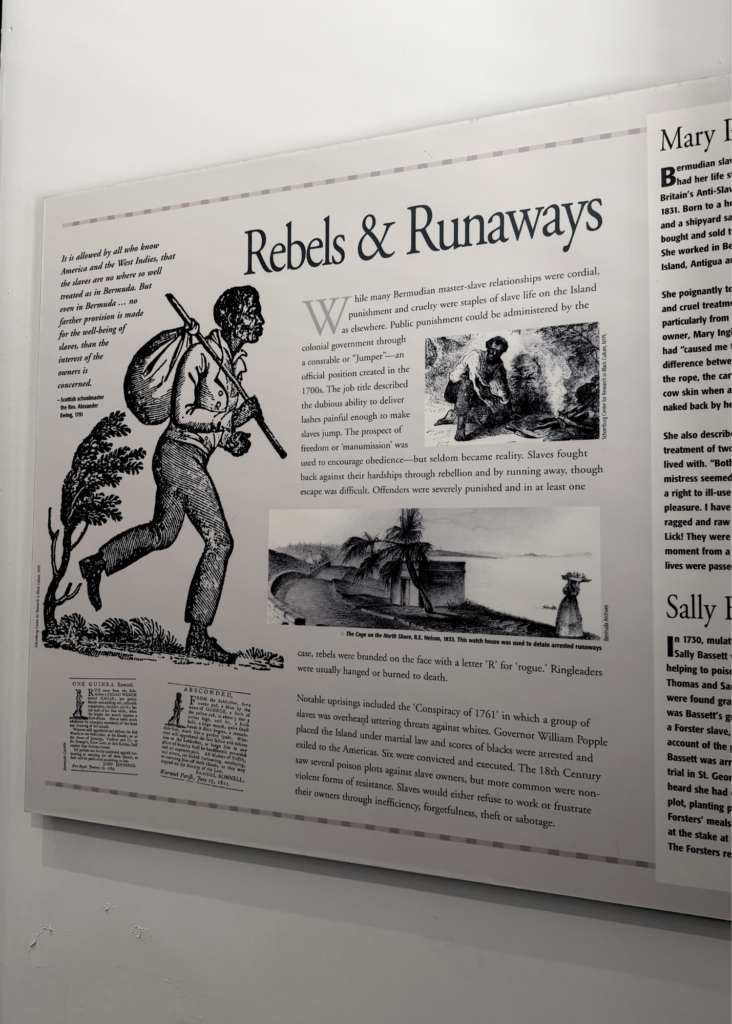
The word was jumper.
What a “Jumper” Was
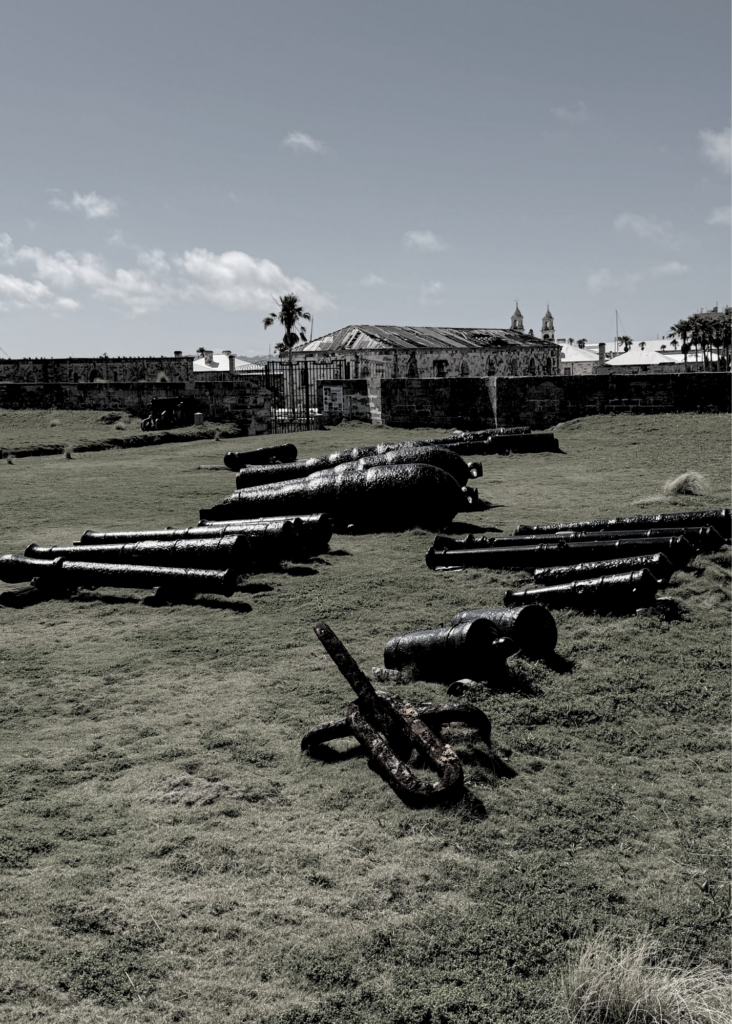
In the context of slavery in Bermuda, a jumper was not a nickname or a metaphor. It was a role. A person assigned to administer floggings, lashes delivered with such force that the body of the enslaved person would literally jump under the blow.
The term describes the physical effect of the punishment. It is clinical, specific, and completely unmistakable. There is no way to soften what it means, and the language doesn’t try to.
Bermuda in the Atlantic System
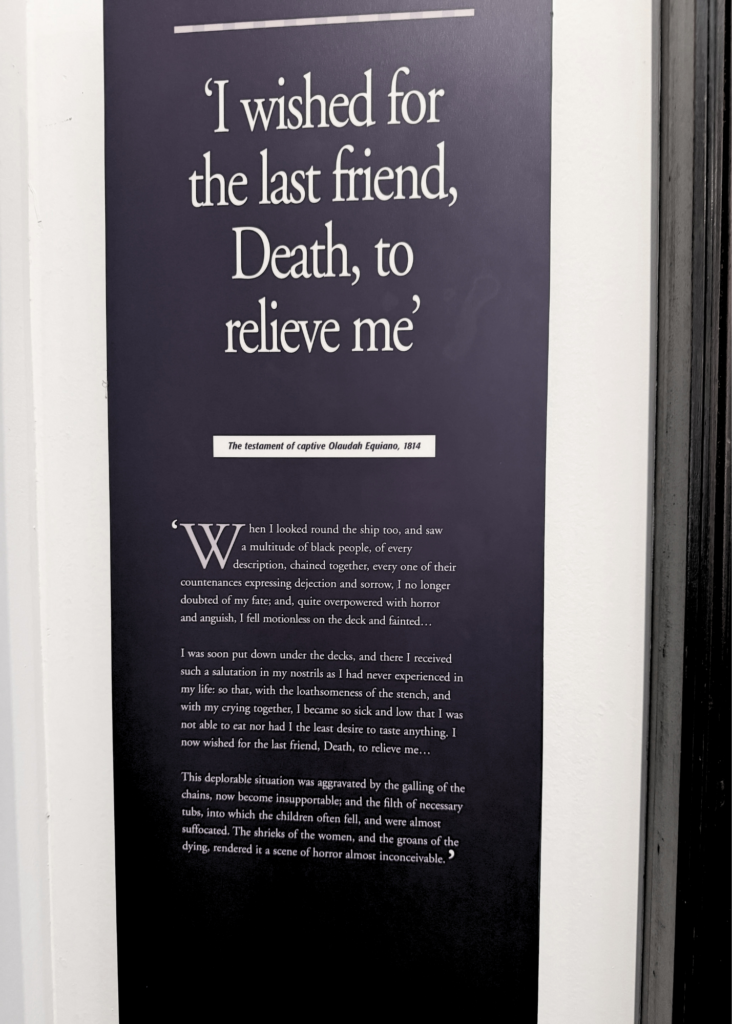
Bermuda existed within the Atlantic system that connected Europe, Africa, and the Americas through trade, movement, and forced labor.
The island’s economy, its infrastructure, the rhythms of daily life — all of it was shaped within that system.
Slavery wasn’t incidental to Bermuda’s story. It was structural. The built environment you walk through today, the pale limestone walls and fortifications that define the island’s aesthetic, rests on labor carried out by enslaved and later free Bermudians.
The quarries are still there. So are the buildings.
Proximity Does Not Mean Gentleness
Because Bermuda is small, a persistent narrative has taken hold that relationships between enslavers and the enslaved were somehow more “familiar,” even “cordial.”
Proximity softened things, the story goes. But a system that requires a role like the jumper tells you exactly how power was maintained.
Violence didn’t need distance. It operated up close, in full view, by design.
Lives That Make History Real
The abstraction breaks down further when you encounter individuals.
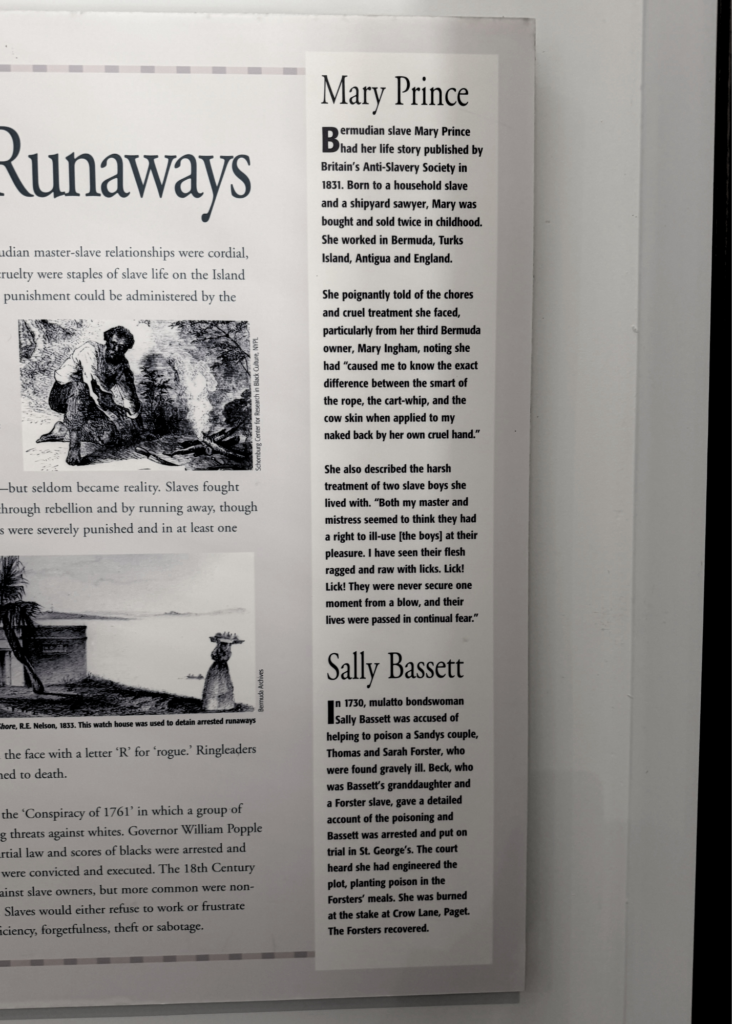
Mary Prince, born into slavery in Bermuda, later published one of the first narratives of a Black woman’s life under slavery in Britain.
Her account is direct, physical, and impossible to sentimentalize.
And Sally Bassett, a bondswoman accused of poisoning an enslaving couple who ultimately survived, was burned alive in 1730.
That punishment was not only extreme. It was public. Demonstrative. Meant to reinforce, in the most visible terms possible, who held power and what resistance would cost.
Faith, Structure, and What the Space Reveals
I saw an old limestone quarry the day I toured the island, and later an old church where even spiritual life reflected the divisions of the system: segregated worship, separate burial grounds, unequal access to space. The reach of it extended everywhere, into every corner of daily life, including the ones you might expect to offer some relief.
What moved me, though, was also finding evidence of those who pushed back against it. There were Methodists here who insisted on teaching enslaved people to read and write, at a time when that act carried real risk. It doesn’t balance the ledger. Nothing does. But it was heartening to see it documented alongside everything else, without being used to soften the larger story.
Abolition, and What Remained
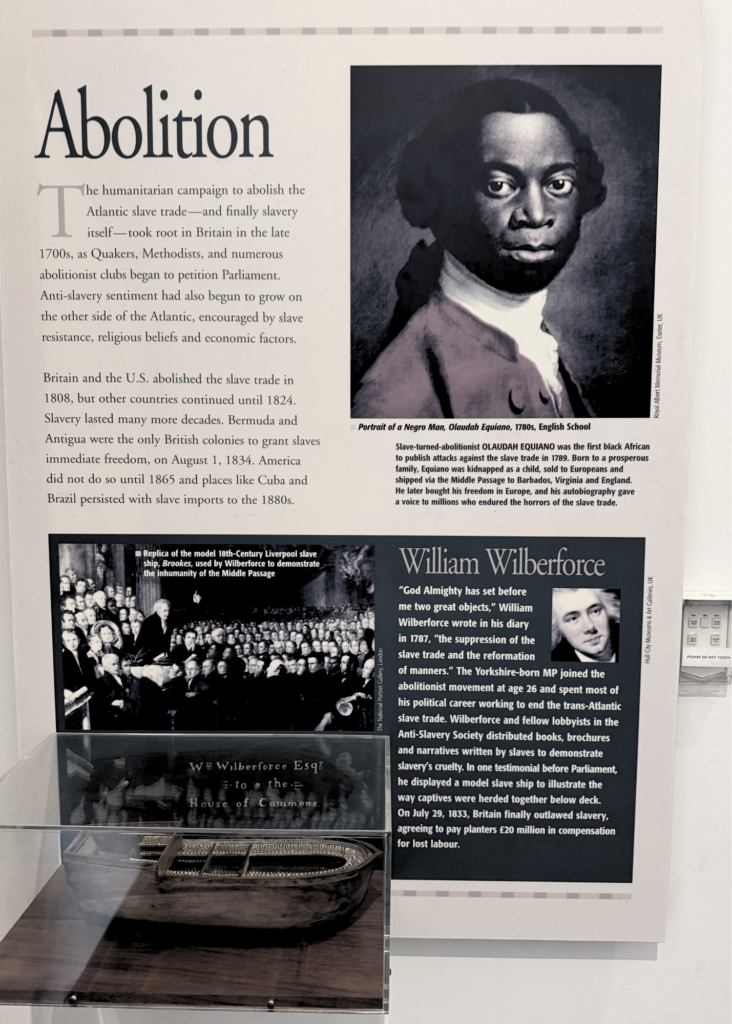
Slavery in Bermuda was abolished in 1834, but abolition didn’t dismantle hierarchy or erase the structures that had been built around it. What it also didn’t erase was memory, and that’s precisely what a museum like this one preserves. The precision of the language matters. The specificity matters. A word like jumper makes the system visceral in a way that no general description can.
Bermuda doesn’t become less beautiful because of this history. But it becomes far more real when that truth is allowed to stand alongside everything else, without apology and without softening.
The museum does exactly that, and I was genuinely glad to have made the effort to go.
It’s one of two overlooked threads I found on the island — the Portuguese immigrants who quietly reshaped Bermuda’s daily life are the other, and that story lives in Beyond British Bermuda.