
Bermuda can feel, at first glance, almost impossibly self-contained. Turquoise water, white roofs, old forts, ships moving slowly across the horizon. It has the quality of a place that has always looked exactly like this, that arrived fully formed and has simply been maintained ever since.
That impression is wrong, and interestingly so.
Bermuda is one of those rare places where the vast machinery of the Atlantic world — exploration, empire, migration, labor, reinvention — compresses itself into a single outpost. Every layer of that history is still visible if you know where to look. Most of it is sitting right on the surface, waiting for someone to ask the right question.
An Island Before Settlement
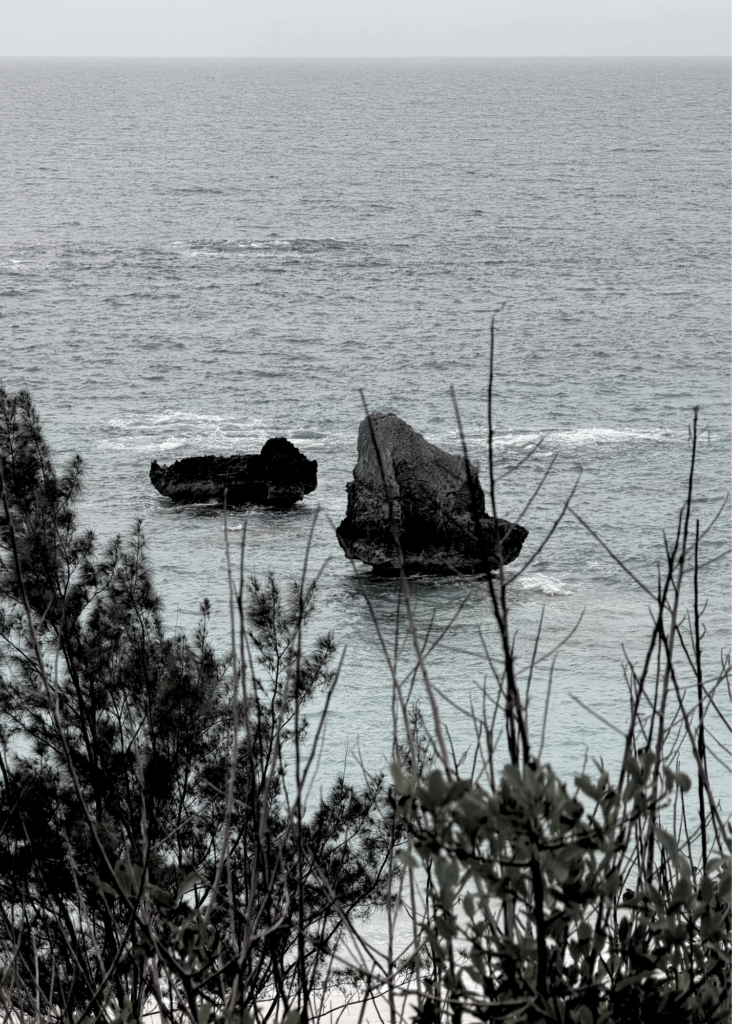
Long before the English established a permanent settlement in 1612, Bermuda was already known to Portuguese and Spanish navigators. It existed as a waypoint in an ocean defined by uncertainty — charted, but not yet claimed. Not a destination. A marker.
And then came a shipwreck. The island’s founding story begins not with intention but with accident: an English vessel wrecked on its reefs, transforming Bermuda from a navigational reference into a colonial possession almost overnight. Which is, when you think about it, a very Atlantic way to begin.
Strategy, Stone, and Survival
From the start, Bermuda’s value was strategic. It became a fortified Atlantic stronghold — military, naval, imperial — and the forts that still ring the island are not decorative. They are evidence of anxiety: about invasion, about control, about holding ground in a contested ocean.
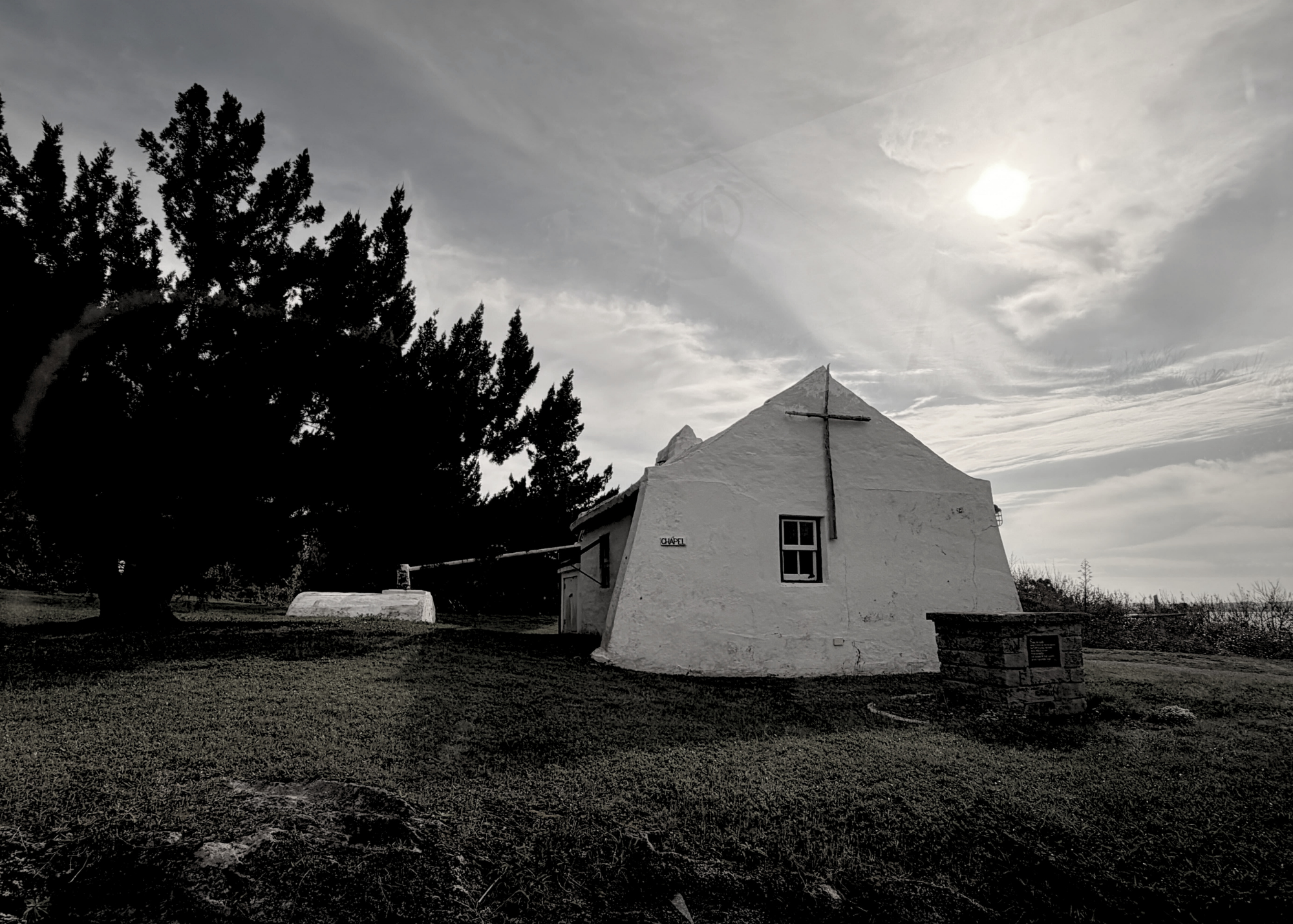
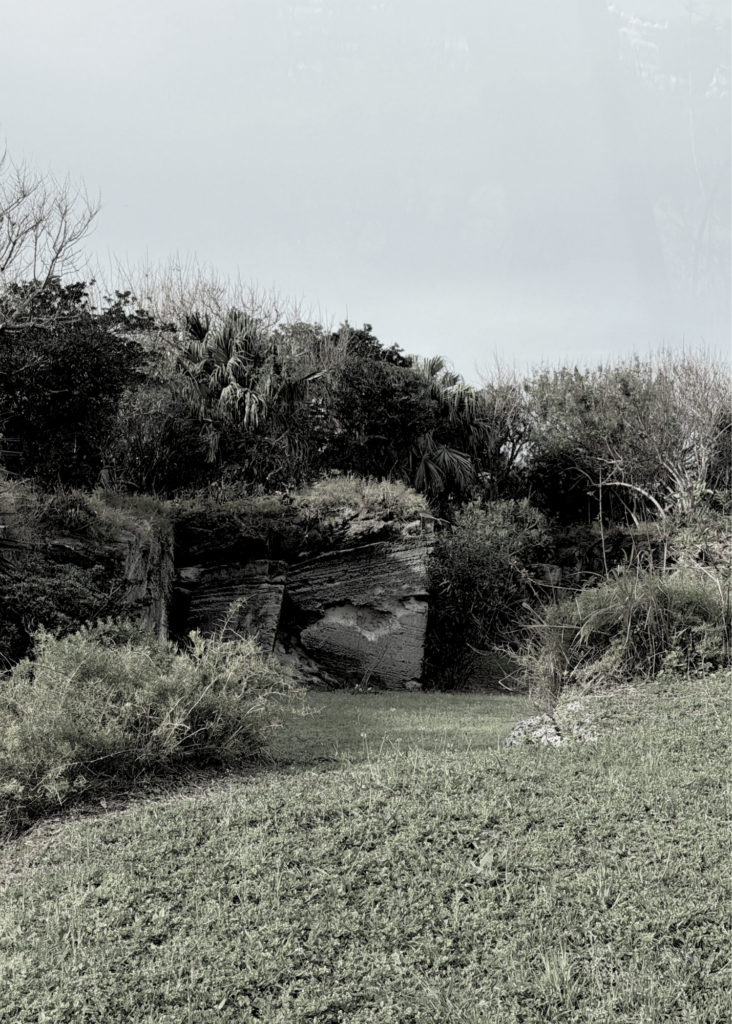
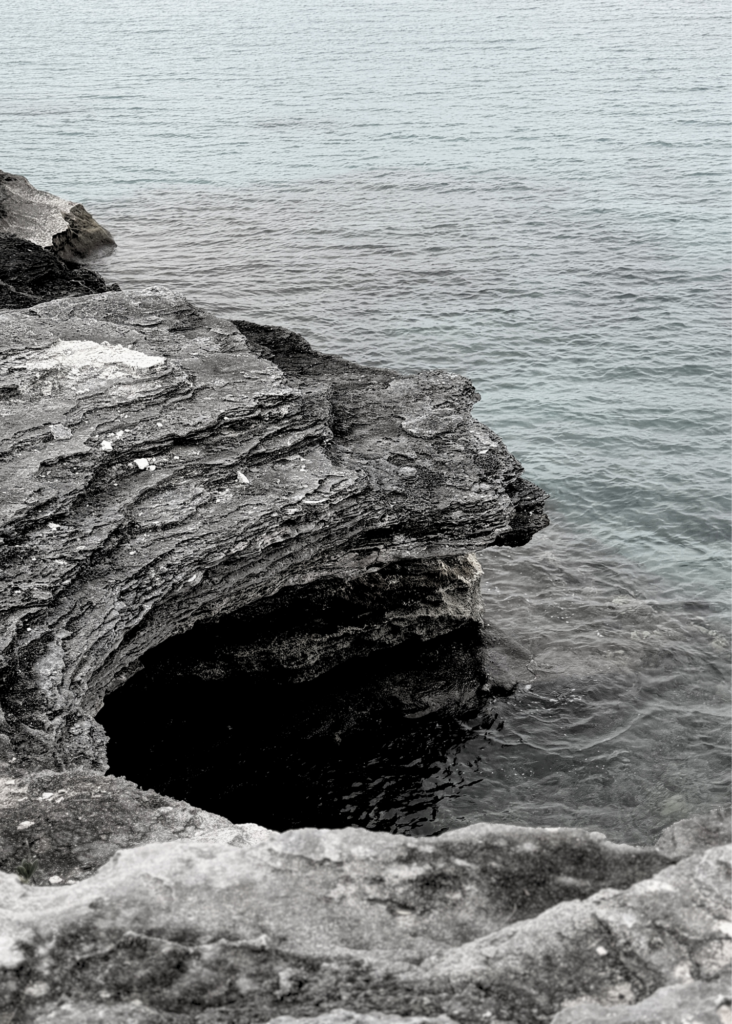
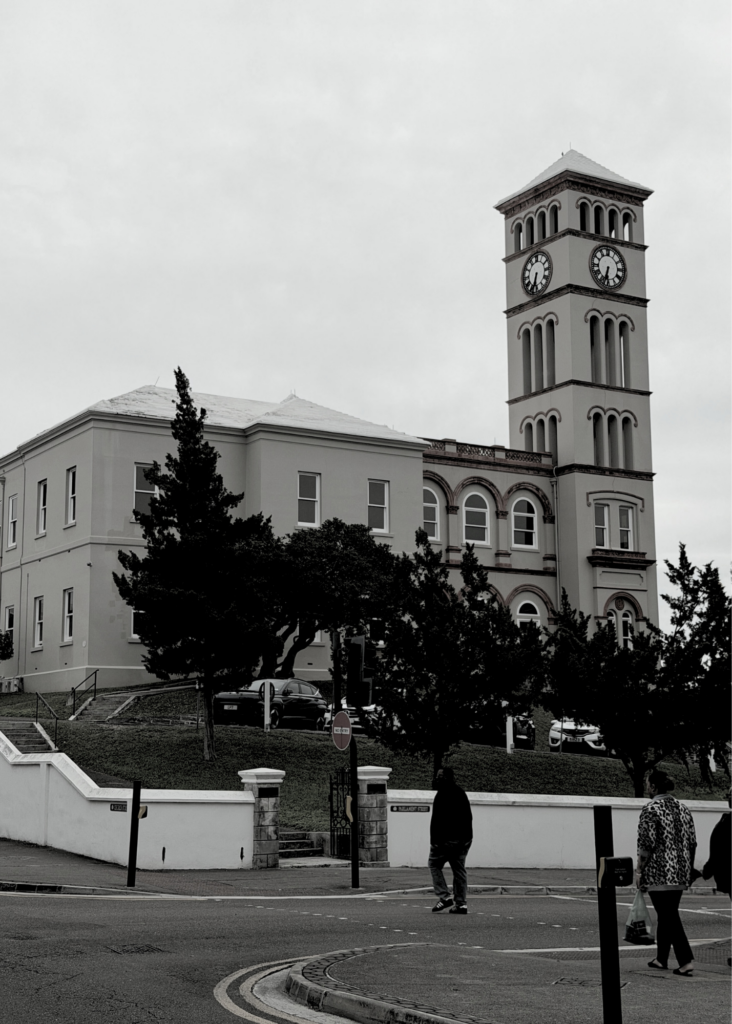
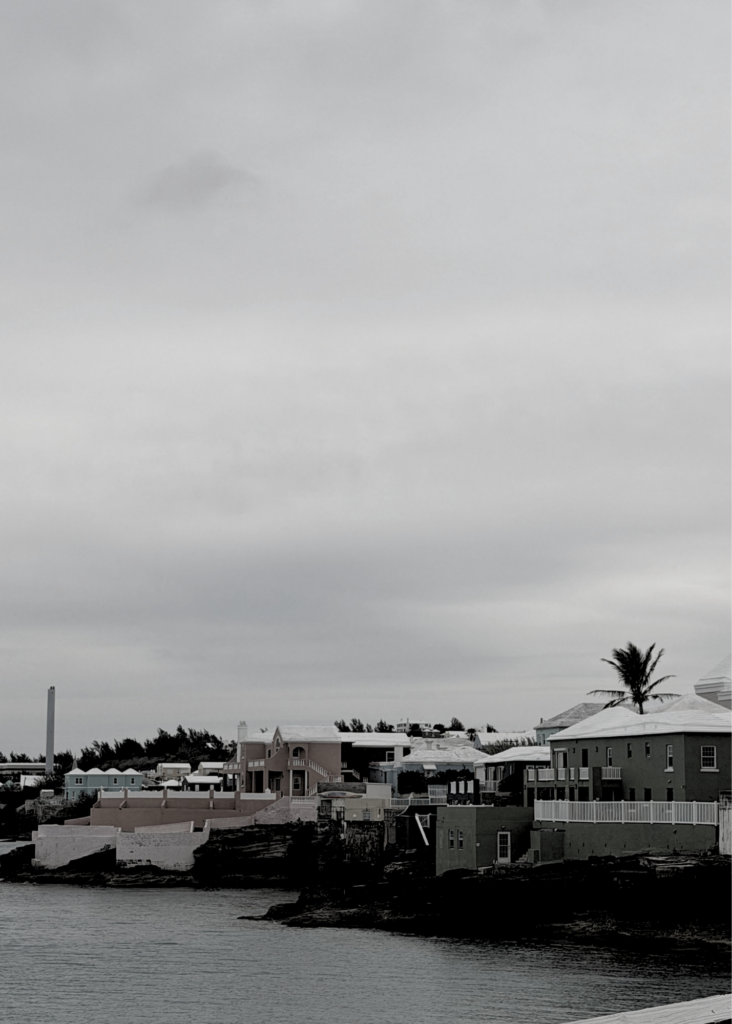
The land itself shaped how that control took form. Bermuda limestone is soft when first cut and hardens over time, which made it ideal for building in a place that needed both speed and permanence. The stepped white roofs, designed to collect rainwater, weren’t aesthetic flourishes. They were survival systems. Architecture here is not a style — it is adaptation made visible, the environment’s terms written into every wall and roofline.
Labor That Built the Island
Behind that architecture lies labor that is too often left unspoken.
Enslaved Africans, free Black Bermudians, and later Portuguese immigrants from Madeira and the Azores all contributed to building the island’s physical and economic life — quarrying stone, constructing homes, farming land that was never easy to cultivate.
This history is foundational, and it deserves to be named plainly. The beauty of Bermuda is inseparable from the people, enslaved and indentured, who made it possible. The limestone walls are gorgeous. They are also a record.
An Island That Chose Restraint
In 1931, Bermuda built a railway running nearly the entire length of the island. For a time, it worked beautifully — tracing the coastline, connecting communities, offering what must have been one of the more scenic commutes in the Atlantic world.
Seventeen years later, it was gone. Dismantled in 1948, quietly and deliberately.
Its disappearance wasn’t simply a failure of infrastructure. It marked a shift in philosophy. Rather than pursue expansion and scale, Bermuda moved in the opposite direction. Car ownership was restricted, a policy that remains in place today. The number of vehicles is deliberately limited, petrol is notably expensive, and movement across the island is managed rather than left to convenience or volume.
What emerges from that choice is something subtle but real. Bermuda doesn’t develop indiscriminately. It curates. And in a world where most places eventually just… let things sprawl, that’s a genuinely unusual thing.
Reinvention as Identity
What distinguishes Bermuda isn’t just its history but the discipline with which it has shaped its own story.
In the 19th century it became a refuge for writers, artists, and those seeking restoration from the noise of modern life. In the steamship era it evolved into a polished Atlantic playground, all elegance and transatlantic ease. With aviation it opened itself to a broader world without quite losing its sense of scale.
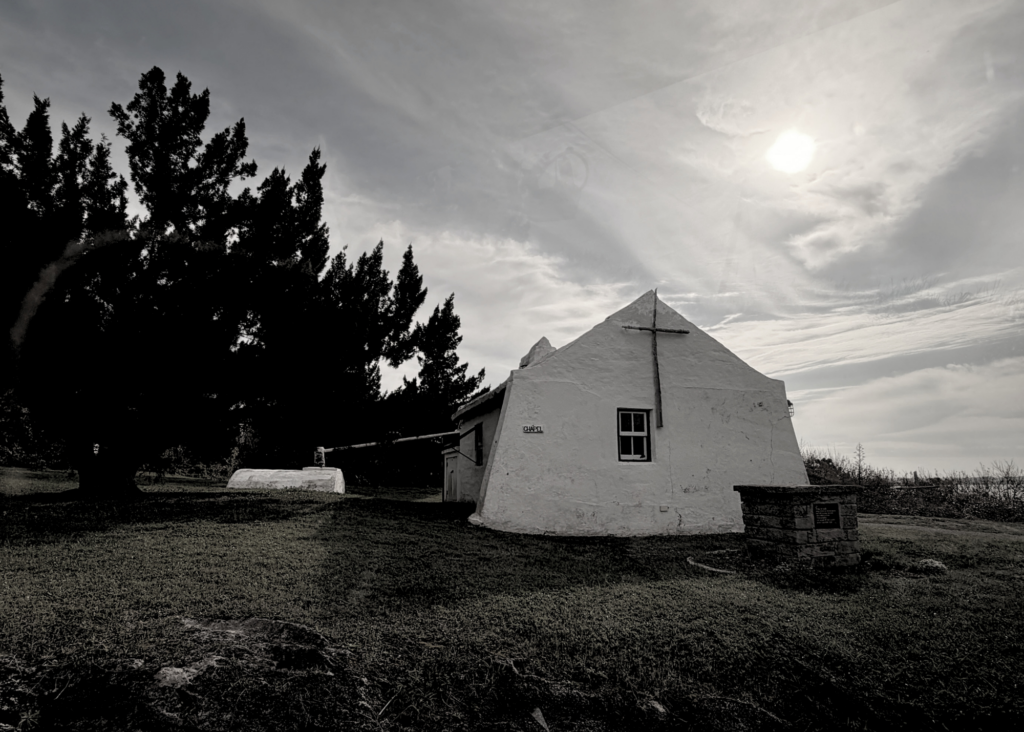
Today, Bermuda is still beautiful — but it is also increasingly self-aware. The forts, the migration stories, the architecture, the African diaspora: these are no longer background. They are part of the story being told, by the island itself, to anyone paying attention.
Stand on the ramparts and look out at the water and it is easy to believe the island is timeless. It isn’t. Bermuda feels made — deliberately, unevenly, over centuries, by many different hands. And that is precisely what makes it worth understanding.