
A Visit to the Roman Baths — and Why Bath Deserves Far More Than an Afternoon
I had forty-five minutes.
Forty-five minutes inside one of the most remarkable sites in the Western world. A place where water has been rising from the earth at the same temperature, from the same source, for hundreds of thousands of years. Where Romans built temples. Where Georgian society came to see and be seen. Jane Austen walked, observed, and quietly skewered everyone around her.
Forty-five minutes is, I will tell you plainly, not enough. The Roman Baths deserve at minimum two hours — ideally a full morning — and Bath itself deserves at least two days. I say this not to apologize for my visit, but to tell you: go back. I already intend to.
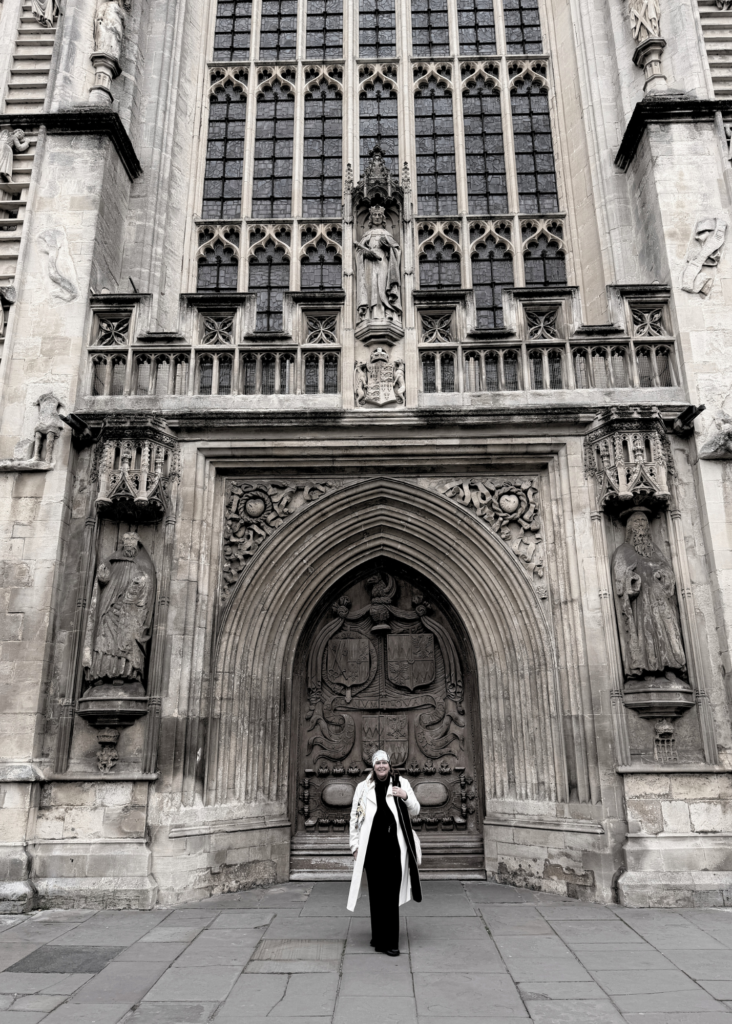
The Prince and the Pigs
As we arrived in Bath, our marvelous driver-guide turned to us with the look of someone about to tell us the thing that makes everything else make sense.
There was a prince, he said. Celtic. Son of a king. He contracted leprosy, and in the ancient world, that was not simply an illness. It was a sentence. He was banished from court, stripped of his rank, and separated from everyone he had ever known. He became a swineherd, wandering the wilderness with his pigs, invisible to the world that had once belonged to him.
One day, his pigs found something. A warm, muddy spring rising from the earth, steaming in the cold air. The animals wallowed in it, as pigs do, and something happened. The sores on their skin began to heal. The prince watched. Then he did what any banished, desperate, clear-eyed person would do. He got in.
He was healed. Completely. He walked back to his father’s court, no longer leprous, no longer outcast, and was welcomed home. He became king. And in gratitude and reverence for what the water had done, he founded a city around the spring.
His name was Bladud. His city became Aquae Sulis. You know it as Bath.
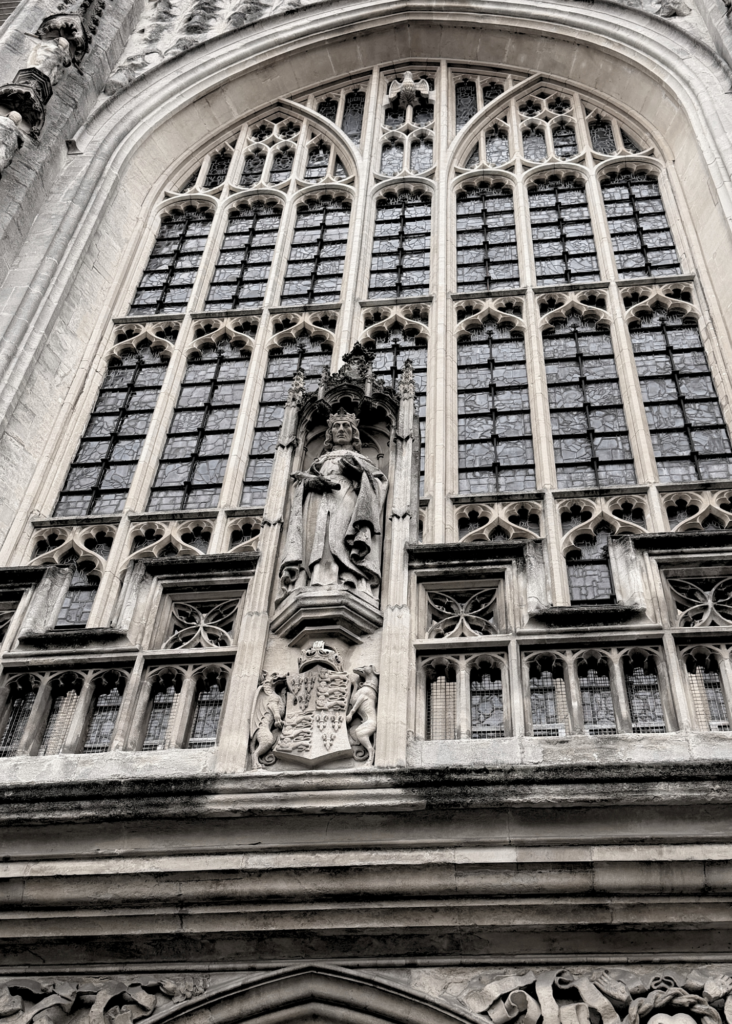
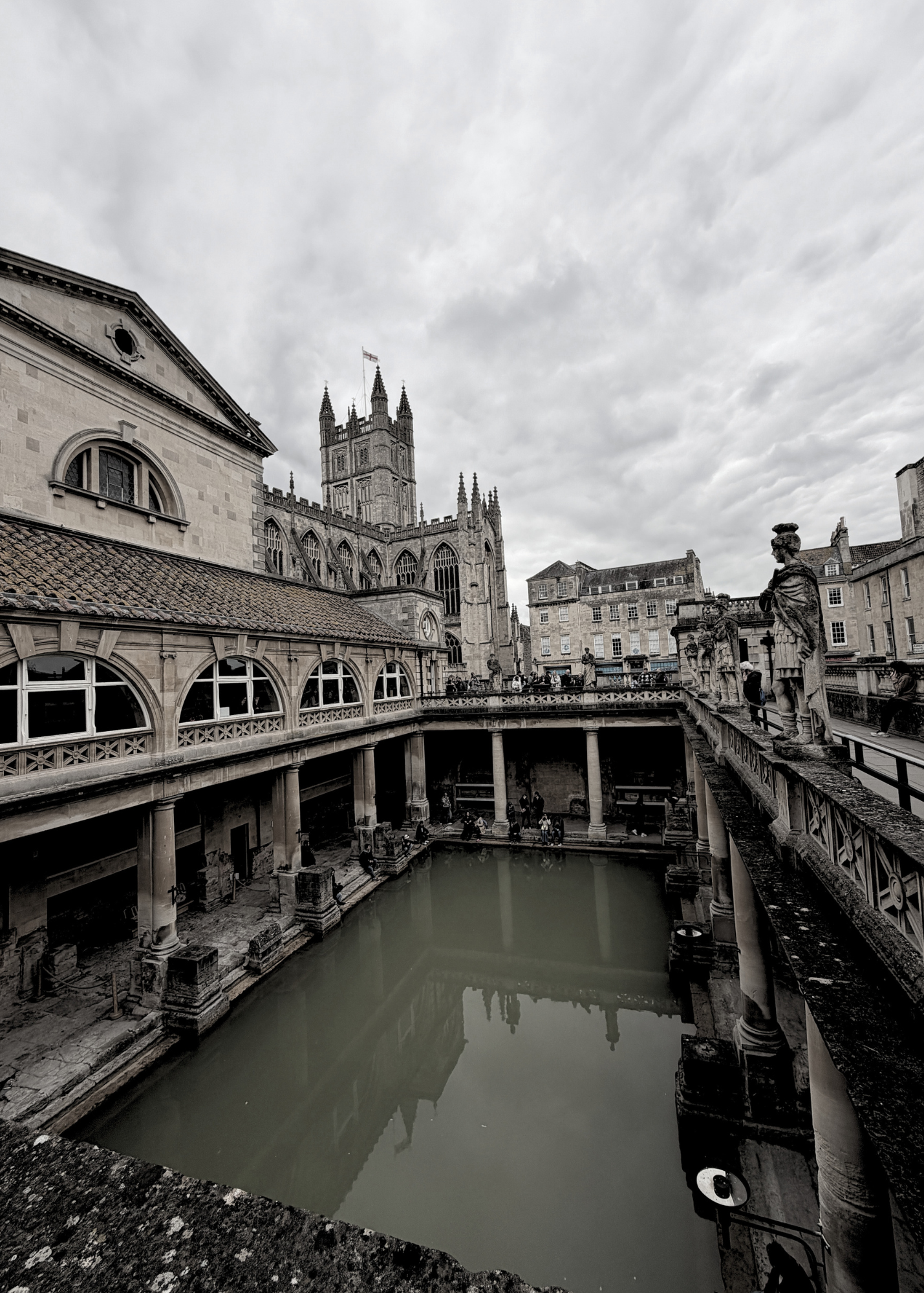
The statue you see in the King’s Bath, that weathered stone figure on the plinth gazing over the sacred spring, is him. It was placed there in the 17th century, because even the Georgians, for all their rationalism and powder and wit, understood that this place had a story older than architecture, older than empire. A story about water that heals without asking who you are first.
In some versions of the myth, Bladud is the father of King Lear. Which means that beneath Shakespeare, beneath the Romans, beneath the Celts even, there is this: a sick man, a warm spring, and the particular mercy of the earth.
I thought about that story the entire time I was inside.
The Water Itself
Before I say anything else, let me tell you about the water.
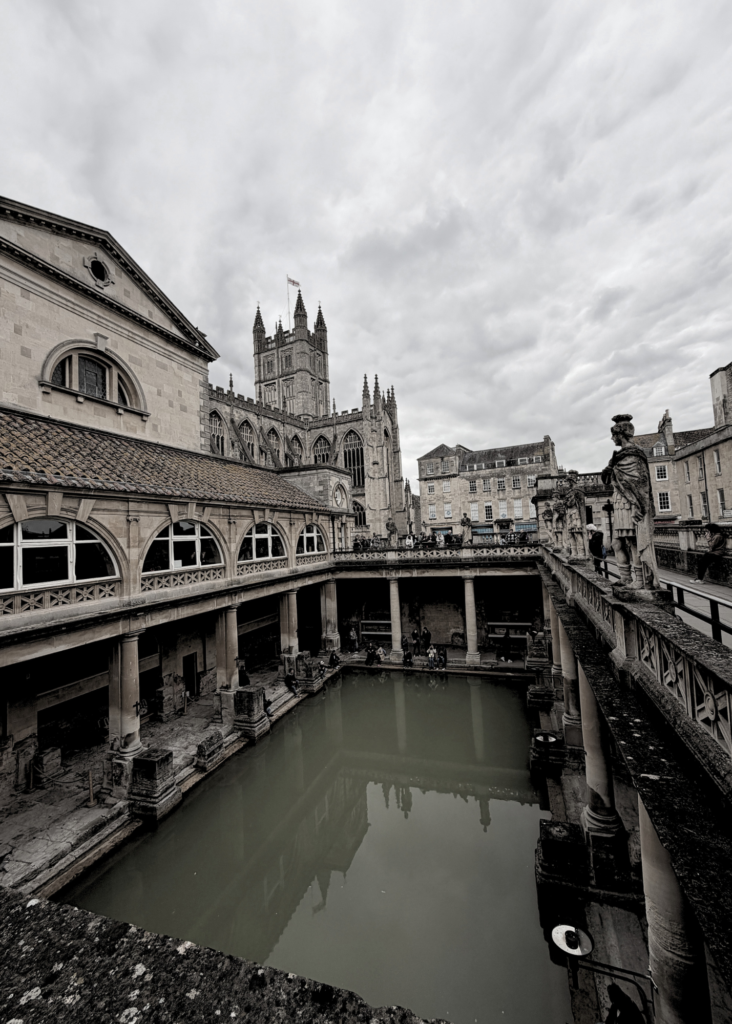
It rises to 46 degrees Celsius (115 degrees Fahrenheit) from a geothermal source deep beneath the city. It has been doing this, continuously, for longer than Rome existed. The Romans didn’t create it. They simply found it, recognized its power, and built a civilization around it.
The mineral content reads like a periodic table. San Pellegrino has 948, Perrier 480, and Evian 320. The water in Bath? Well, a 2012 analysis documented 2,270 milligrams of minerals per liter. Only Vichy Célestins at 3,325 compares. What minerals were found? A panoply! Including sulfate, calcium, chloride, sodium, bicarbonate, magnesium, silica, potassium, strontium, fluoride, and trace elements, including iodine, barium, selenium, even nickel and zinc.
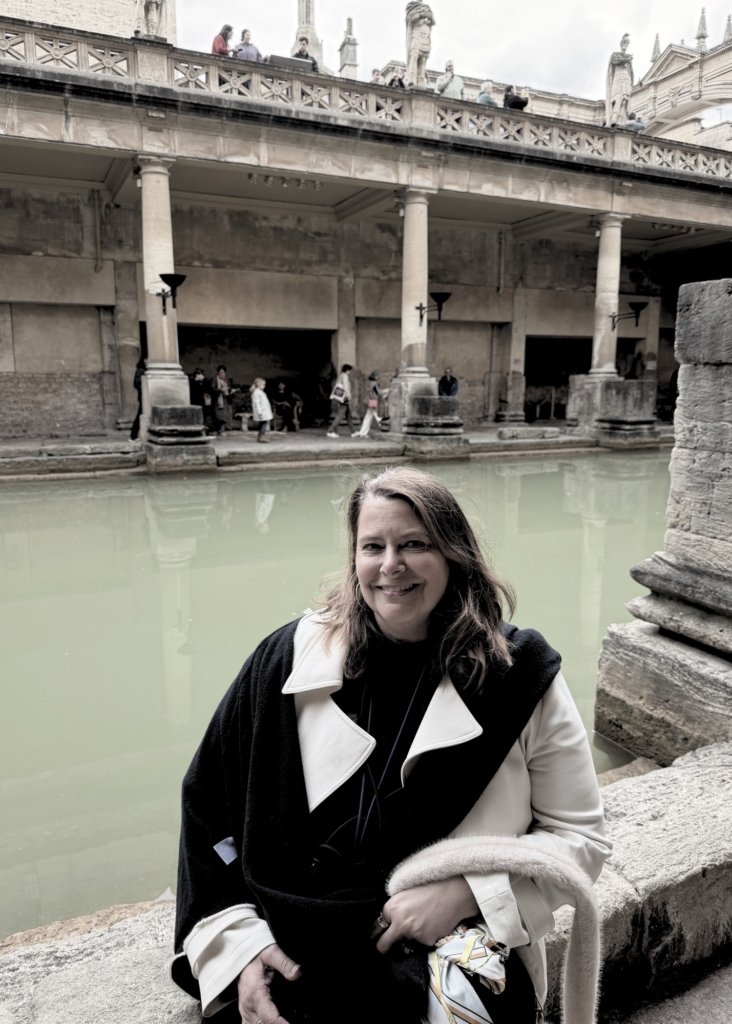
The Romans didn’t know the chemistry. They just knew the feeling.
Seneca, writing around 60 AD in his Epistulae ad Lucilium, put it simply: “We adore springs of hot water as divine, and consecrate certain pools because of their dark waters or their immeasurable depth.”
Two thousand years later, standing at the edge of that jade-green pool with Bath Abbey rising behind it, I understood exactly what he meant.
A City That Called the World
What stopped me completely, what I keep returning to in my mind, was the coin collection.
Over 12,000 coins have been recovered from the sacred spring. Twelve thousand individual acts of petition, hope, grief, and gratitude, thrown into the water by human hands across nearly four centuries. And they did not come only from Roman Britain. They represent the entire known world.
Among the thousands thrown as offerings, scholars have identified Eastern Empire coins that did not normally circulate in Britain at all. That means someone carried them from what is now Turkey, from the far eastern reaches of the Roman world, and threw them into this spring in Bath. There are coins depicting the goddess Minerva. Coins bearing the earliest known representation of Britannia. Gold coins of the usurper Allectus were thrown in together. Forgeries alongside genuine currency. Coins spanning every emperor from Augustus (27 BC) through the late empire. And some, the museum notes quietly, from the Eastern Empire, regions as distant as Syria and Asia Minor, that had no business circulating in Britain at all.
That just boggled my mind. People came from across an empire that stretched from Scotland to Syria, from Morocco to Mesopotamia. Aquae Sulis was not a remote provincial outpost. It was an ancient travel destination.
And they came here. They stood at this spring as I was, they made their offerings, and they asked the goddess Sulis Minerva for what they needed. It made me consider what I wanted to offer and what I wanted to ask for.
The museum displays a coin timeline that traces every emperor from Augustus through Galerius, representing 350 years of continuous devotion. Even the peaks are telling: Antoninus Pius, Trajan, Hadrian.
Notably, these leaders were the great builders, the administrators, the ones who invested in the empire’s infrastructure. Apparently, Bath flourished under their watch.
What They Asked For
The curse tablets are, to my mind, the most unexpectedly moving thing in the entire museum.
Thin sheets of lead and pewter, inscribed and folded and thrown into the sacred spring as petitions to the goddess Sulis Minerva. They are not grand theological declarations. They are human. Entirely, painfully human. And just marvelous.
- Someone lost a hooded cloak and promised its recovery to “the most holy goddess Sulis.”
- Someone else lost six silver coins and named Christians and pagans as possible thieves. This is one of the earliest references to Christians in Roman Britain.
- A person named Docilianus reported the theft of his bracelet, leaving the culprit’s name ominously incomplete: “the name of the culprit who has stolen my bracelet…”
- One tablet was written by a scribe copying from a written page.
- One person’s unusual spelling of “blanket” may, the museum notes gently, indicate dyslexia.
- A man named Deomiorix simply didn’t specify what had been taken from him.
- A curse was addressed to Mercury, naming the suspects but not the crime.
- Another sanctioned perjury.
- Some curses, the museum notes, have never been read. They remain folded, their grievances still sealed, still waiting.
Two thousand years ago, people were losing things, accusing neighbors, seeking justice from a power beyond ordinary reach. The goddess Sulis Minerva, a fusion of the Celtic goddess Sulis with the Roman Minerva, goddess of wisdom and craft, presided over this spring as both healer and avenger.
Gaius Calpurnius Receptus, the priest in charge of her temple, led ceremonies in the courtyard of Aquae Sulis. His gravestone, shaped like an altar and the only memorial from Roman Britain where a person’s occupation is reflected in the form of the funerary monument itself, speaks to how central this role was. His widow commissioned it. She was proud of what he had done here.
The Architecture of Wellness
The Roman bath complex was not simply a large pool. It was a sequenced wellness experience, and a sophisticated one.
The balneum, the cold water immersion bath, held water at approximately 13 degrees Celsius. The museum’s tactile map lets visitors feel the cold stone it was built from. The tepidarium, the warm room, was kept at around 25 degrees, and after bathing, a metal tool called a strigil was used to scrape sweat and scented oil from the skin. Romans used olive oil infused with lavender flowers as a massage oil, applying it before baths and removing it afterward. Bathers in the cold immersion pool may also have used medicinal plants, including aloe perryi, for skin conditions.
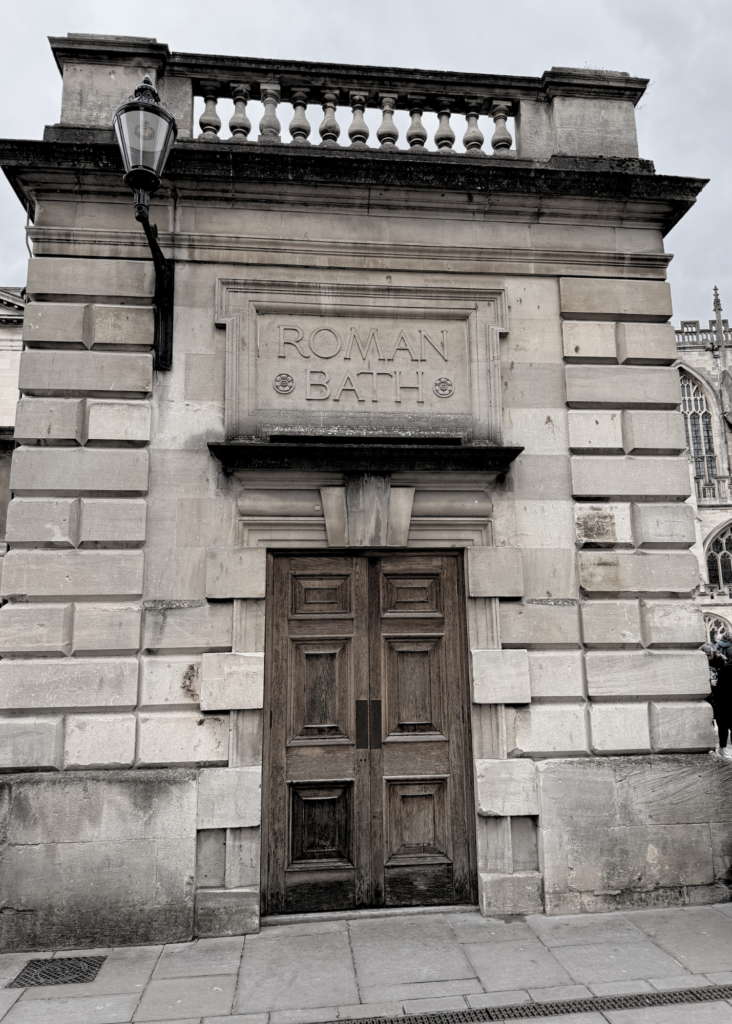
Beneath the heated rooms, the hypocaust system circulated hot smoky air drawn from a charcoal fire through pillars of tiles supporting the floor, then through hollow flue tiles built into the walls. The smoke escaped through the roof vents.
It was engineering in service of the body, considered, layered, intentional. Not so different, in principle, from what we now call a spa. It made me think of the spa at Six Senses Rome, which also features cold, tepid, and warm baths!
The god Aesculapius, Rome’s deity of healing, also held a presence here. Those seeking divine help for illness could spend the night in special temple buildings. On waking, priests helped interpret their dreams. An altar depicting a scene from the birth of Aesculapius was found in the Cross Bath spring nearby, one of three sacred springs in Bath, each distinct in character.
Centuries of Transformation
The spring’s history after Rome is a long story in itself.
In the 12th century, the King’s Bath was built directly within the Roman ruins, with the Roman reservoir still intact beneath it and the 2nd-century Spring building’s two arches still visible. In the 17th century, the statue of Bladud and the balustrade were added. The chair known as the Master of the Baths seat was donated by Anastasia Grey in 1732.
In the 18th century, the Pump Room was built above the spring, that grand salon where Georgian society came not just to take the waters but to take stock of one another.
In 1979, the King’s Bath floor was removed, and the water level was lowered to its Roman level, restoring it to something closer to what the original builders knew.
The waters, physicians declared over the centuries, could cure almost anything. “If they can’t be cured by drinking and bathing here,” wrote Dr. William Oliver in 1707, “they will never be cured anywhere.” J.G. Douglas Keer, writing in 1891, took a more cautious position: the Bath Waters were so powerful in their action that treatment by them must be entered upon with caution and not without a certain amount of responsibility. A 1632 text recommended drinking the waters hot, as they rise, for better penetration and less offense to the stomach.
Characteristically, Charles Dickens was less reverential. In The Pickwick Papers (1836), when Mr. Weller is asked whether he has drunk the waters, Sam replies that he found them “particklery unpleasant,” possessing a “wery strong flavor o’ warm flat irons.” The waters are still available to taste at the Pump Room fountain. I can report that Dickens was not entirely wrong.
What I’d Tell You
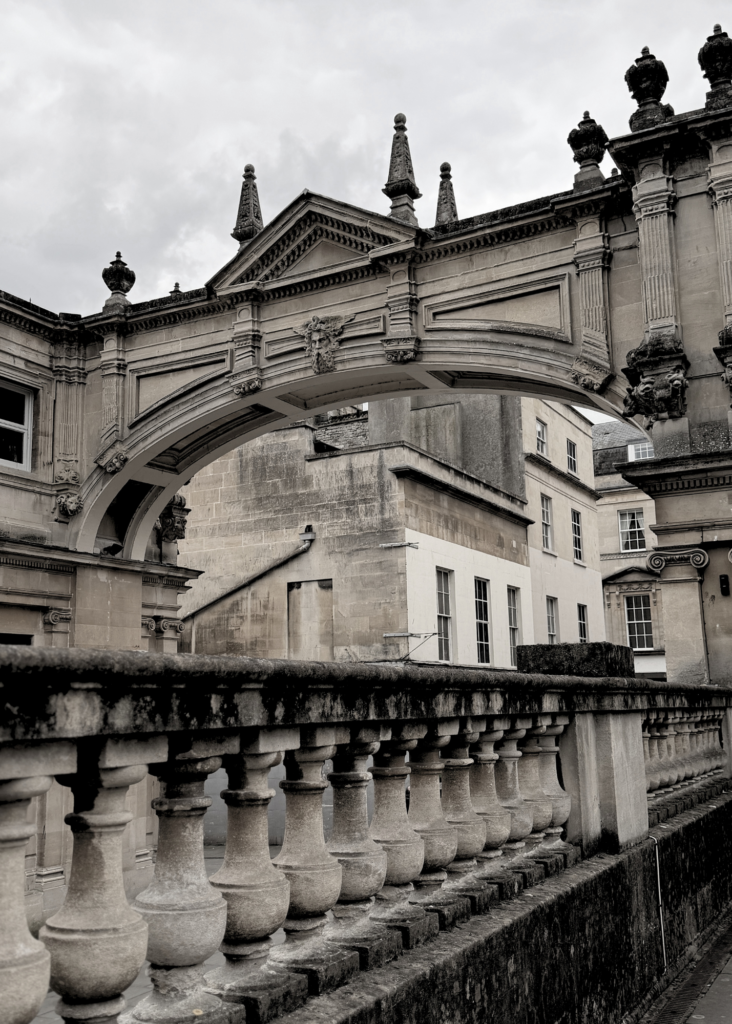
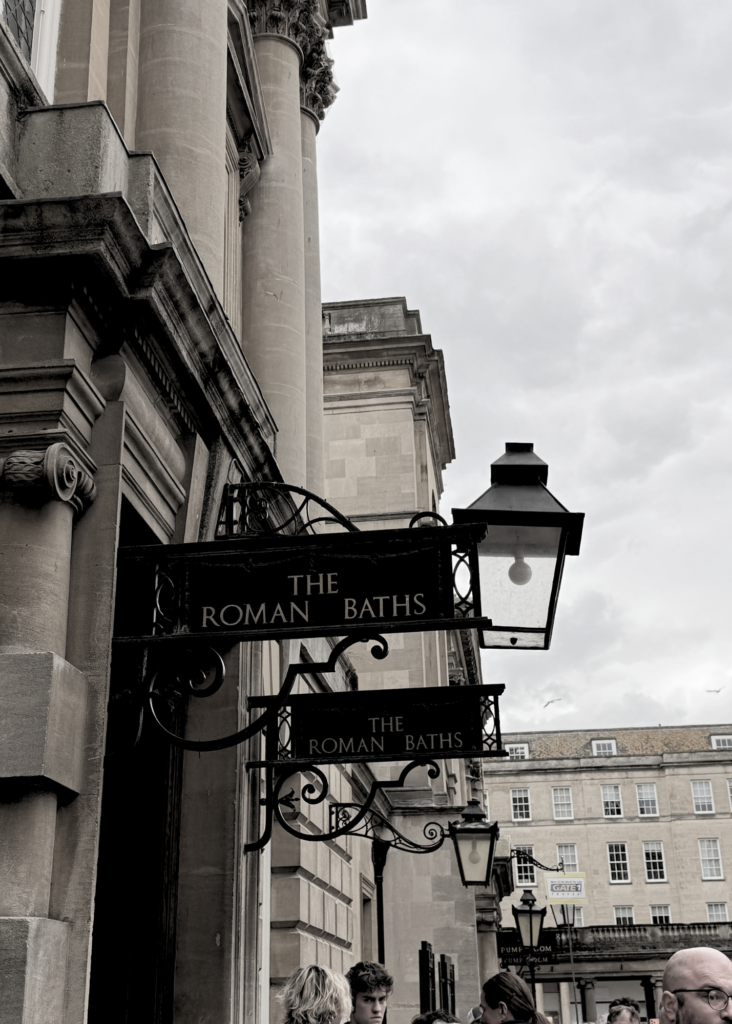
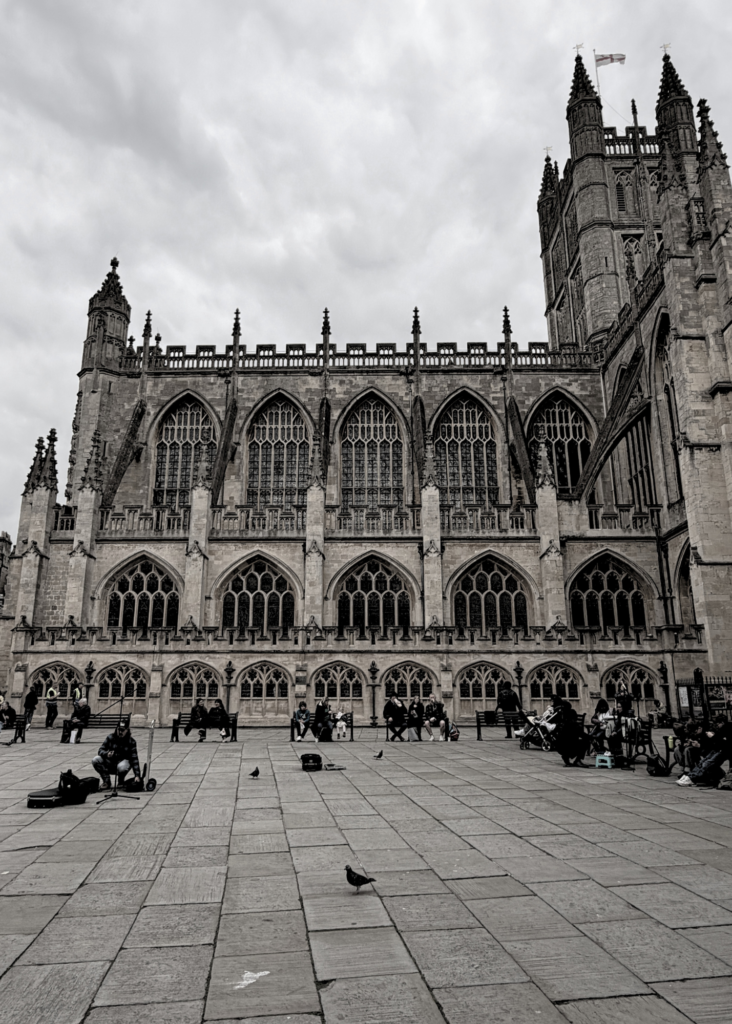
Bath is one of those places that shouldn’t be rushed. I felt disappointed that I didn’t have more than half an afternoon. So be sure to allow more time.
Two full days, minimum. One morning at the Roman Baths. Arrive when it opens, take the audio guide, read every placard, stand at the edge of the sacred spring, and understand that the water rising before you has been rising since before the Celts named it, before the Romans built above it, before the medieval kings bathed in it.
The history here is nearly incomprehensible.
The water has always been here. It is in no hurry. Neither should you be.
To learn more, the Roman Baths has a wonderful YouTube channel at youtube.com/@the_roman_baths, where you can go deeper into the history, archaeology, and ongoing research at the site.
It is, like Bath itself, worth more time than you think.